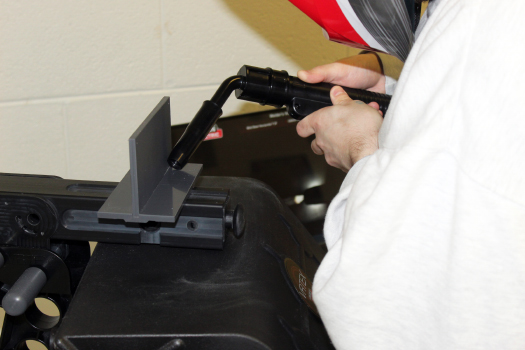
Community Placement Programs
DJJ contracts with juvenile detention centers (JDCs) to operate Community Placement Programs (CPPs), structured residential programs within the JDC for direct care youth. A goal of the CPPs is to place youth in smaller settings closer to their home communities to facilitate a smoother transition after release and to increase family engagement. CPPs focus on Positive Youth Development and increasing competency in areas of education, vocational preparation, life and social skills, thinking skills, employability skills, and anger management. CPPs use the Youth Assessment and Screening Instrument (YASI) as the basis for case planning to address criminogenic needs. Services focus on dynamic risk factors using cognitive-behavioral techniques and are tailored to meet the individual needs outlined in the youth’s Comprehensive Reentry Case Plan (CRCP). Additionally, CPPs deliver aggression management and substance use treatment services, as well as individual and family therapies. The following JDCs operate CPPs:
- Blue Ridge (Charlottesville)
- Chesterfield
- Newport News
- Prince William (Manassas)
- Shenandoah Valley (Staunton)
- Virginia Beach

Frequently Asked Questions
Male and female (Merrimac CPP and Northern Virginia CPP only) juveniles:
- Juveniles placed in the community placement programs (CPPs) will be between the ages of 13 years through 20 years old who are committed to DJJ.
- Juveniles assessed as being low or moderate overall risk will be prioritized for placement in an alternative setting which may include a CPP. High risk juveniles can be reviewed for placement at a CPP.
- The length of stay is variable.
- Juveniles referred to CPPs demonstrate moderate to high criminogenic risk to reoffend and commonly have a history of trauma, exposure to violence, association with anti-social peers, and display impulsivity, deficient emotional regulation, and decision making.
CPPs provide programs for juveniles that are both indeterminate and determinate commitments. Upon agreement to placement, the case will be referred through DJJ’s residential case management system. All placements will have final approval by the residential case management system.
Each CPP has a full time dedicated case manager assigned to provide services solely to CPP juveniles. The case manager is responsible for maintaining a collaborative partnership with the parole officer and Central Admission and Placement (CAP) counselor, developing and maintaining the CRCP, ensuring the oversight of service provisions, providing behavioral re-direction interventions and modeling pro-social behaviors. The CPP case manager, in collaboration with the parole officer, maintains a YASI driven CRCP for each juvenile.
Referrals to the CPP program are made by the CAP Manager or designee based on the juvenile’s identified needs, consideration of responsivity factors, and geographical location. Juveniles assessed as being low or moderate overall risk will be prioritized for placement in an alternative setting which may include a CPP. High risk juveniles are assessed on an individual basis and may be referred to a CPP when determined that placement in a smaller milieu will best meet their individualized needs. Upon agreement to the placement, the case will be referred through DJJ’s residential case management system.
The detention facility provides the following in their CPP:
- Room and board
- Daily supervision
- Basic services (including education, recreation, employability, etc.)
- Routine basic medical services
- Transportation
- Education services: K-12 and post-secondary
- Surveillance and monitoring while away from the facility
- Visitation
- Evidence informed services that address criminogenic needs of juveniles involved in the juvenile justice system, to include ART: Aggression Replacement Training.
- Trauma informed approaches, focused on positive youth development, skill building and increasing competencies.
- Addressing treatment needs to include anger management, substance abuse, prosocial and life skills, peer refusal skills, job readiness services, trauma-informed mental health services, to include individual and family therapy as needed, and medication management.
- Additional services may be provided by private providers to juveniles in the CPP based on their identified needs.
The CAP counselor is responsible for presenting the juvenile’s case at ICRC/CCRC for approval of off-campus trips or furloughs.
-
Off-campus trips:
- Indeterminate commitments – The CAP counselor will present the case for blanket off-campus approval at the same time as the ICRC/CCRC review for CPP placement approval.
- Determinate commitments – The CAP counselor will coordinate judicial approval for off-campus trips prior to requesting the blanket approval through ICRC/CCRC.
- All furloughs require ICRC/CCRC and review and approval on an individual basis. Requests for furloughs shall be presented to CCRC a minimum of two (2) weeks prior to the event. Determinate commitments also require judicial approval. All furloughs require approval from the Deputy Director of Residential Services.
The CPP must request approval for each off-campus trip a minimum of 48 hours prior to the trip through the CAP Manager, including the specific date, time, address(es), and staffing details prior to each off-campus trip. The CPP should also provide alternative dates/times in the event that there are weather or staffing changes that prohibits the CPP from utilizing the original date/time.
All juveniles leaving the facility for an off-campus trip must be supervised by at least two (2) trained staff members at all times (sight and sound supervision). One (1) staff must be of the same gender as the juvenile. Juveniles should be provided appropriate community clothing to ensure they are not readily identifiable as a resident of a juvenile facility.
Juveniles may be approved by ICRC/CCRC to participate in work assignments and/or educational programming off-campus in accordance with DJJ procedure VOL IV-4.1-4.10 (Work and Education Release Program).
Juveniles shall be eligible for release based on the following criteria:
- Completion of treatment or progress in treatment when the continuation of needed services is available in the community;
- Progress on educational and career readiness goals and objectives as identified in the CRCP;
- Satisfactory behavioral adjustment;
- Approval from ICRC/CCRC;
- Approval from the Deputy Director of Residential Services (if applicable); and
- Acceptance onto parole by the assigned PO/jurisdiction.